What Qualifies a Pastor? The Essential Characteristic That Churches Keep Overlooking
By Jared C. Wilson

Ask most people what they want in a pastor and you’ll hear about preaching, vision, and presence. These are good gifts. But we have all seen gifted pastors self-destruct or hurt healthy churches. Pastors must exhibit maturity. Can he take criticism without coming apart, carry conflict without being consumed by it, and lead from peace rather than panic? Spiritual maturity is not optional; it’s essential. But as Jared C. Wilson writes, the good news is that maturity is not produced by sheer effort but through dependence upon God.
Spiritual Maturity Isn’t the Same as Giftedness
Good pastoral mentoring will sharpen a man’s skills and gifts, but it will never mistake them for Christian growth.
If we can’t equate theological interest, personal influence, or extraordinary giftedness to spiritual maturity, what does spiritual maturity look like?
What Does Spiritual Maturity Look Like in a Pastor?
The tangible qualities of spiritual maturity are exhibited in the earnest and uncoerced exercise of the spiritual disciplines. As a baseline, your pastoral mentee must be a man given to the study of God’s Word and prayer, not merely out of religious duty but out of worshipful delight. He must be actual friends with Jesus.
But beyond initiative in spiritual disciplines, spiritual maturity shows in intangible ways—things like holiness, a pastoral disposition, and emotional stability. One mark of maturity is the ability to delay gratification. Another is the regulation of one’s emotions. If a pastoral candidate characteristically acts impulsively, leaps without looking, speaks without thinking, and has trouble seeing beyond the now, he is still showing signs of needing to grow up. If he has a pattern of being unable to read a room—laughs or cracks jokes at serious moments or speaks harshly or judgmentally in lighter moments—he is showing signs of spiritual immaturity.
Signs of Emotional Immaturity to Look For
- When he receives criticism, does it wreck him for days? Does it cut right to his identity in a way that leaves him unstable, inconsolable, or otherwise emotionally erratic? Is his first thought either cowardice or revenge?
- Does he constantly make excuses for not completing assignments, not taking appropriate relational steps with others, or not following through on tasks and responsibilities? Is he lazy?
- Does he walk around wearing a badge of victimhood, constantly blaming others for his circumstances or lack of progress or hurt? He may well be correct that he is a victim of someone’s evil deeds. But that is quite different than self-consciously embracing the identity of victimhood.
All of these are the intangible signs of emotional immaturity, and thus spiritual immaturity.

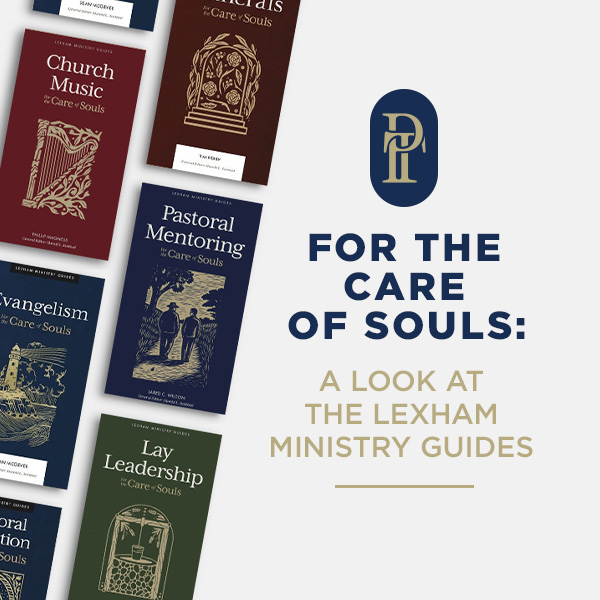
Pastoral Mentoring
For the Care of Souls
By Jared Wilson
While formal theological education plays an important role, the local church is uniquely equipped to train its shepherds. This book empowers pastors and church leaders to identify and mentor future ministers right where they are.
The True Source of a Pastor’s Emotional Stability
The prophet Isaiah writes, “You keep him in perfect peace whose mind is stayed on you, because he trusts in you” (Isa 26:3). This verse does not speak necessarily to peaceful circumstances. There is no promise that faith in God will produce a peaceful life. (In fact, the Bible tells us numerous times that following Jesus will often create more conflict in our lives.) But there is a promise that steadfast faith in God will produce peace of mind and peace of heart.
The spiritually mature man does not walk around like a bundle of nerves. He may face afflictions like depression, anxiety, or other mental health challenges, but they do not define him. They do not root his identity. No matter what his trouble, he knows that he can find supernatural contentment through a mind “stayed on God.”
This characteristic is vital for pastoral ministry because over time church leaders face many unforeseen challenges that will threaten their sense of stability and peace. How can a leader remain at peace despite church conflict, waning attendance, caring for those who suffer, counseling the victimized, agonizing over church discipline situations, and more?
If he is trusting in his own power, he can’t. But if he is working from the power of Christ’s gospel, he can endure anything. Paul writes in 2 Corinthians 12:9–10:
But he said to me, “My grace is sufficient for you, for my power is made perfect in weakness.” Therefore I will boast all the more gladly of my weaknesses, so that the power of Christ may rest upon me. For the sake of Christ, then, I am content with weaknesses, insults, hardships, persecutions, and calamities. For when I am weak, then I am strong.
The incredible thing here is that Paul sees the challenges of ministry as an advantage! He boasts in his weakness. He is content in his afflictions. Why? Because they help him rely on Jesus’s strength.
Why Emotionally Mature Pastors Endure
It is in times of trial and tribulation that we discover whether our stability is in ourselves or in Jesus. Our own power is finite and fallible. It will not take much in ministry to prove its weakness. But Jesus’s power is infinite and infallible. It cannot be rocked by anything.
None of this means that the spiritually and emotionally mature pastor never shows human emotions—never gets sad, for instance, or scared or anxious. It only means that the spiritually and emotionally mature pastor knows to cast his cares on the Lord who cares for him (1 Pet 5:7). He knows to do that so that his emotions are not run by his circumstances but by the One who runs his circumstances.
This article has been adapted from Jared C. Wilson’s book Pastoral Mentoring: For the Care of Souls, published by Baker Books. This book empowers pastors and church leaders to identify and mentor future ministers right where they are.
Jared C. Wilson is assistant professor of pastoral ministry and author in residence at Midwestern Seminary and director of the Pastoral Training Center at Liberty Baptist Church, all in Kansas City, Missouri.