Is Scripture Infallible and Inerrant—and Does It Matter?
By R. C. Sproul

The principle of sola Scriptura was key to the Reformation era debates over justification and what authority can bind the consciences of believers. The Reformers were convinced that, because the Bible has its origin in God and was superintended by his inspiration, it is infallible.
The Infallibility of Scripture
The principle of sola Scriptura was key to the Reformation era debates over justification and what authority can bind the consciences of believers. The Reformers were convinced that, because the Bible has its origin in God and was superintended by his inspiration, it is infallible. Infallibility refers to its indefectibility or the impossibility of its being in error. That which is infallible is incapable of failing. We attribute infallibility to God and his work because of his nature and character. With respect to God’s nature, he is deemed to be omniscient. With respect to his character, he is deemed to be holy and altogether righteous.
Theoretically we can conceive of a being who is righteous but limited in his knowledge. Such a being could make mistakes in his utterances, not because of a desire to deceive or defraud but due to his lack of knowledge. His would be honest mistakes. At the human level we understand that persons may make false statements without telling a lie. The difference between a lie and a simple mistake is at the level of intent. On the other hand, we can conceive of a being who is omniscient but evil. This being could not make a mistake due to lack of knowledge, but could tell a lie. This would clearly involve evil or malicious intent. Since God is both omniscient and morally perfect, however, he is incapable of telling a lie or making an error.
Let us examine briefly a formula that has had some currency in our day: “The Bible is the Word of God, which errs.” Now let us expunge some of these words.
Remove “The Bible is” so that the formula reads: “The Word of God, which errs.” Now erase “The Word of” and “which.” The result is “God errs.” To say the Bible is the Word of God that errs is clearly to indulge in impious doublespeak. If it is the Word of God, it does not err. If it errs, it is not the Word of God. Surely we can have a word about God that errs, but we cannot have a word from God that errs.
The Inerrancy of Scripture
In addition to affirming the Bible’s infallibility, Reformed theology describes the Bible as inerrant. Infallibility means that something cannot err, while inerrancy means that it does not err. Infallibility describes ability or potential. It describes something that cannot happen. Inerrancy describes actuality.
For example, I could score 100 percent on a spelling test. In this limited experience I was “inerrant”; I made no mistakes on the test. This would not warrant the conclusion that I am therefore infallible. Errant human beings do not always err. They sometimes, indeed often do, err because they are not infallible. An infallible person would never err simply because infallibility as such precludes the very possibility of error.
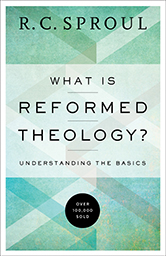
What is Reformed Theology
Understanding the Basics
By R. C. Sproul
Founder of Ligonier Ministries and author of more than ninety books introduces readers to the distinctives of Reformed theology in this timeless and valuable resource.
Why the Infallibility of Scripture Matters to Us
What does the Bible’s infallibility mean for the average Christian seeking to be guided by Scripture?
Suppose two people read a portion of Scripture and cannot agree on its meaning. Obviously one or both of them misunderstand the text. The debate between them is a debate between fallible people.
Suppose, however, that the text is clear and that neither person disputes its meaning. If one of them is convinced that the text is God’s infallible revelation, then the question of whether he should submit to it is answered. If the other person is persuaded that the text itself (in its original transmission) is fallible, then he is under no moral obligation to be bound by it.
The Authority of Scripture
The issue of Scripture’s inspiration and infallibility boils down to the issue of its authority. A famous bumper sticker reads as follows: “God says it. I believe it. That settles it.”
What is wrong with this statement? It adds an element that is unsound. It suggests that the matter of biblical authority is not settled until the person believes the Bible. The slogan should read: “God says it. That settles it.” If God reveals something, that revelation carries the weight of his authority. There is no higher authority. Once God opens his holy mouth, the matter is settled. This is axiomatic for Reformed theology.
The question of sola Scriptura is fundamentally one of authority. The Reformed doctrine of sola Scriptura, then, affirms that the Bible is the sole written authority for the faith and life of God’s people.
We are always called to seek more and more to bring our faith and practice into conformity to the Word of God.
This article has been adapted from What Is Reformed Theology? Understanding the Basics by R. C. Sproul, published by Baker Books. This modern classic is an accessible introduction to the foundations of Reformed doctrines that have been immensely influential in the evangelical church.
R. C. Sproul (1939–2017) was founder of Ligonier Ministries, an international Christian discipleship organization located near Orlando, Florida. Dr. Sproul spoke at conferences, churches, colleges, and seminaries around the world and wrote more than 100 books, including The Holiness of God, Chosen by God, and Everyone’s a Theologian. He also served as general editor of the Reformation Study Bible