
Can You Pray Deeply from a Script? Three Reasons to Pray Historic Prayers

As the editor of the Prayers of the Church series, Robert Elmer has encountered hundreds of prayers from historic saints. We asked him to reflect on the benefits of praying with the cloud of witnesses that came before us.
Is it possible to pray deeply from a written script? Initially, our answer might depend on church upbringing, tradition, or denomination. But written prayers from believers who came before us can open a path to a richer private and corporate prayer life. I was reminded of this reality while editing the Prayers of the Church series by Lexham Press.
Three questions brought me face to face with the benefits of prewritten prayers: how they can reveal spiritual blind spots, connect us with the historic church, and even reshape how we sometimes pray.
Old Prayers Reveal Our Spiritual Blind Spots
Prayers from the historic church can help discipline our affections and shed light on our blind spots. That applies whether we’re considering prayers of the Puritans in the first book of the series (Piercing Heaven), the early church (Fount of Heaven), the Reformation (Grace from Heaven), or the revivals (Joy of Heaven).
But let’s come clean about those blind spots I mentioned: We all have them. I was raised Lutheran, for example, but grew in faith at a Christian and Missionary Alliance Bible college. So the Puritan prayers in Piercing Heaven spoke to me deeply—yet often from a direction beyond my spiritual upbringing.
Grace from Heaven spoke to me just as powerfully. And what would a Reformation-themed prayer collection be without Martin Luther? For all his struggles, Luther’s brash, honest faith jumps off the pages. I treasure his prayers. In one, he doesn’t hesitate to call himself an “empty vessel, weak in faith.”
He wrote, “I have no firm faith, and I do not always trust in you.” (Grace from Heaven) Luther’s blunt honesty about his own blind spots is something many believers can relate to. And when that happens, it’s natural to claim his prayers as our own.
Historic Prayers Connect Us to the Wider Church
Praying with those who came before reminds us of our place within the historic Christian mainstream. After all, by grace God writes our name on a page of the salvation story, along with all who have called Jesus Lord.
So we are connected, whether we realize it or not. And connection matters. John Calvin once prayed, “Almighty God, you provided for your ancient church through the prophets, but you also designed a way for the fruit of their labors to continue to our age. Help us to remember and be thankful—and to take advantage of so great a benefit, so its fruit may grow for the glory of your name.” (Grace from Heaven)
Still, that heritage—our identity—is easy to overlook. We live in our cultural bubbles, do we not? And we may at times assume we are too far removed from early believers, or from the Puritans, reformers, and revivalists. Many years have passed. Culture has changed. People have changed.
Thes prayers in these books refute that assumption by pulling us back to connection. They help us realize we’re really not so different from earlier Christians. We face many of the same needs, think many of the same thoughts, and find ourselves in many of the same situations. So why not join with the saints and pray? God has answered them already once; I believe he longs to answer once again.
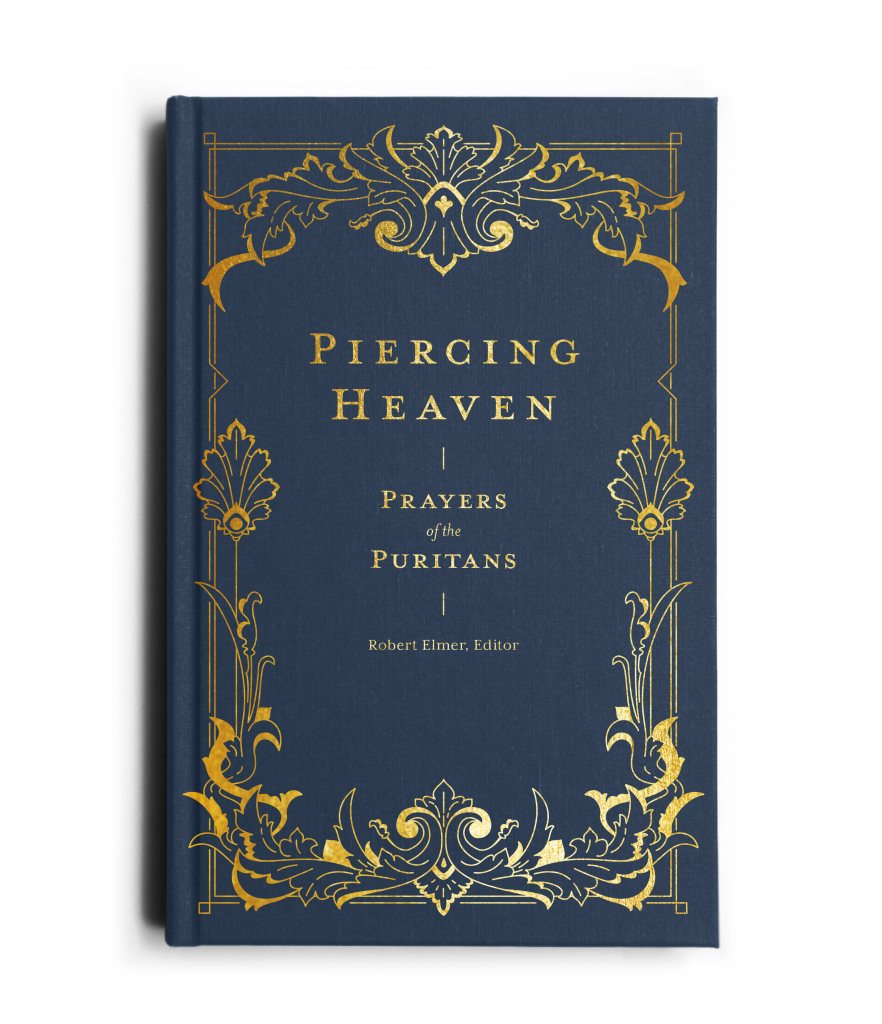

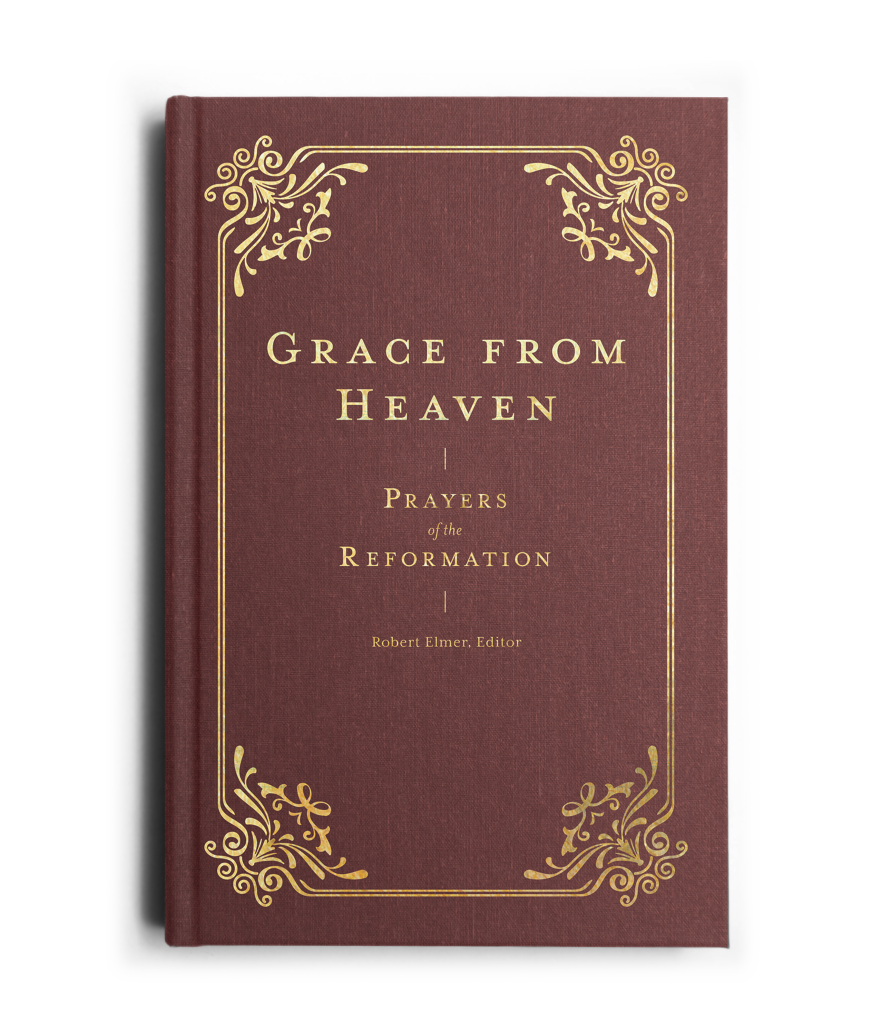

Prayers of the Church Series
Edited by Robert Elmer
The Prayers of the Church series gathers the legacy of faith and wisdom from across the Christian tradition to help readers grow into godliness. Each volume focuses on a different tradition or historical era, bringing spiritual riches from across history and the global church to new readers today.
Prewritten Prayers Give Us The Words We Lack
We risk starving ourselves spiritually if we maintain that spontaneous prayer is the only authentic way to pray.
But are prewritten prayers just vain repetition?
Perhaps it’s tempting to discount written prayers as “liturgical formalism” or “vain repetition.” That’s a natural reaction.
However, let’s look at the issue not as either/or, but as both/and. Because written prayers—just like spontaneous prayers—can help deepen and straighten our prayer life. In public, scripted prayers can keep us from wandering down rabbit trails and awkward (vain?) repetition. In private, they can pull us past “I don’t know how to pray.”
Consider your favorite worship music or hymns, whose many lyrics we easily repeat during church services. Vain repetition? Liturgical formalism? Hopefully not! In the same way, the Holy Spirit can also use written prayers. “Send forth the Holy Spirt with a greater power than ever,” prayed Charles Spurgeon, “so our hearts may leap within us as they see miracles of mercy repeated within our midst.” (Grace from Heaven)
Discovering a Better Way
For many of us, adopting scripted prayers may take a little getting used to. Even believers who often pray from a psalter face a challenge, since Jesus warned us not to “…heap up empty phrases as the Gentiles do” (Matthew 6:7, ESV). The key word here is “empty” (or “vain”). Mindless. That warning can apply equally to both scripted and spontaneous prayer.
When we pray with Christians who came before us, such as those in the Prayers of the Church series, we embark on a journey of discovery. We can pray with the zeal of the earliest believers, the truth of the reformers, the courage of the Puritans, and the fire of the revivals.
We can build a devotional framework from the wisdom and experience of believers who have gone before us. By adopting their heartfelt prayers as our own, we build a stronger connection to the past—as well as to the eternal Lord who spans the centuries.
So this is our privilege and birthright as spiritual grandchildren. Through these prayers, we can avoid vain repetition and discover fresh ways to share and live more deeply into the “faith that was once for all delivered to the saints” (Jude 1:3).
Surely that is a discovery worth making.
Robert Elmer is editor of Piercing Heaven: Prayers of the Puritans and other volumes in the Prayers of the Church series. He has written more than fifty books of Christian fiction, devotion, and apologetics, for all ages. He and his family live in the Pacific Northwest. Visit his website at RobertElmerBooks.com.